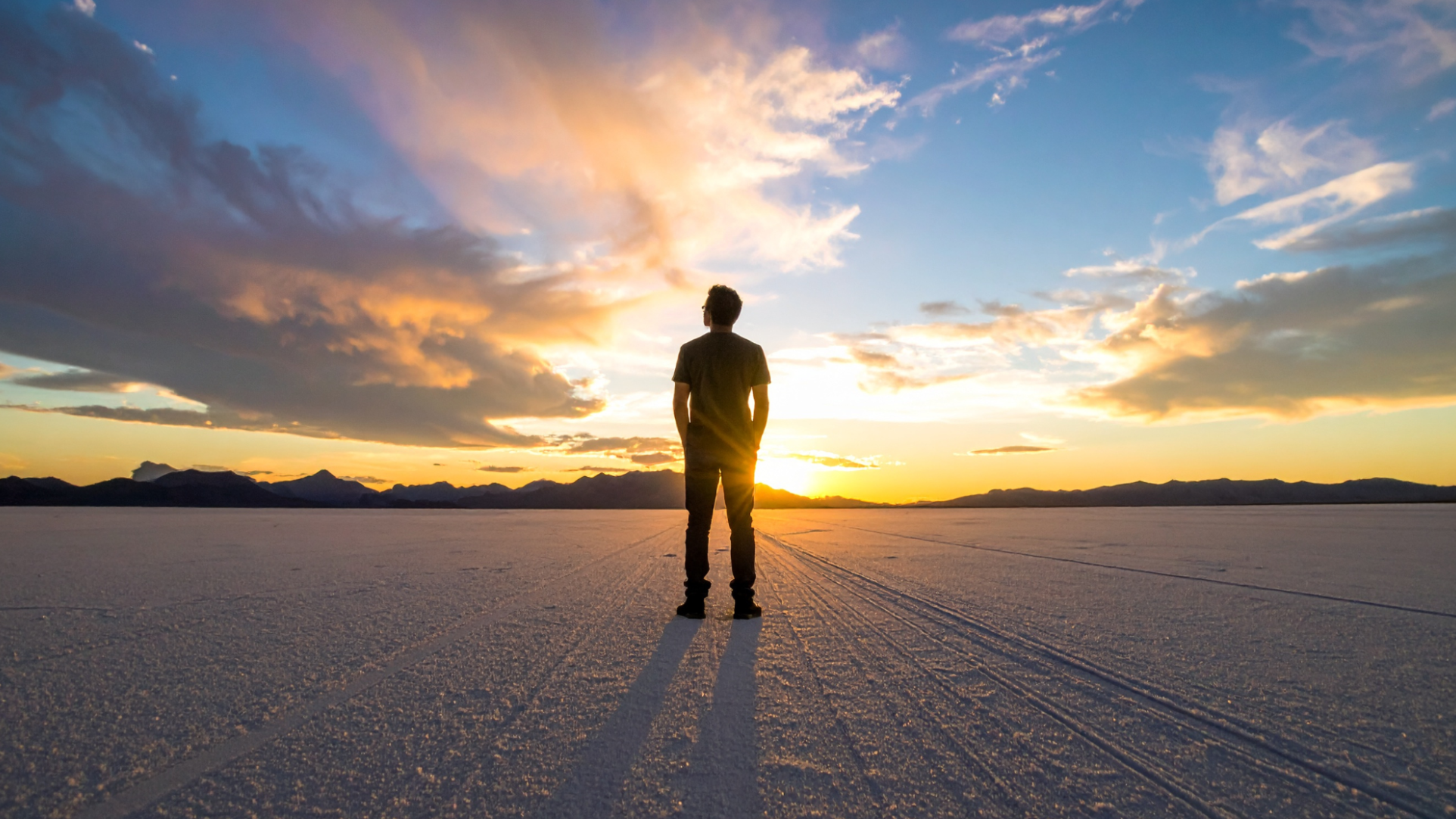

Recently, my husband and I traveled to Utah to check off a bucket list item: visiting Utah’s Mighty Five National Parks. We also took a side trip to the famous Bonneville Salt Flats, a vast expanse of solid white salt about an hour and a half from Salt Lake City. The flats stretch 12 miles long and 5 miles wide, covering 46 square miles. Made up of 90% sodium chloride (table salt), with smaller amounts of potassium and magnesium salts, the salt layer can be nearly 5 feet deep at its center and is solid enough to drive on.
We stopped at a roadside site where we could walk across the expansive, solid salt surface. After taking photos, we drove about seven miles to a location where driving on the salt was permitted. The Bonneville Salt Flats host annual speed races, and numerous land-speed records have been broken there. The fastest recorded speed was 622 miles per hour in 1970, set by Gary Gabelich. Initially, we hesitated to drive our rental SUV on the flats, worried it might not hold up to the terrain, but seeing several cars, some speeding across the salt, encouraged us to try.
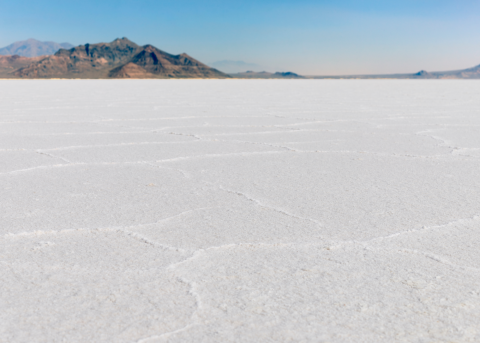
We initially drove slowly in circles, stopping several times to take photos. Eventually, my husband, Danny, increased our speed and went further. He then chose to drive closer to the mountain on our left. As we neared the mountain, we didn't realize the sand underneath was becoming soft. We paused to take pictures with the mountain in the background, and then observed that the tire tracks had darkened, indicating the salt was wet.
We got into the car and started driving, but we were stuck in the sand! Revving the engine only dug the tires deeper into the salt and spun us out without moving us! There was no cell phone reception. Other cars were dots in the distance. No amount of acceleration could get us out of our predicament. We were just getting deeper into the salt. Finally, Danny got out of the car, took the tire rod out of the back, and scraped the now dark, moist salt from the car's tires. While he was doing that, I was loudly asking God to rescue us!
After what felt like forever, he finally said, “Get out of the car. You drive, and I’ll push!” I took the wheel and slowly started to accelerate as he pushed. The vehicle moved slightly, then gradually rolled out of the salt rut. Danny kept shouting, “Don’t stop, keep driving!” I drove until the dark tire tracks vanished and I was back on solid white sand, with Danny running up from behind. Whew! God rescued us! “Thank you, Jesus,” I prayed aloud. On our return to Salt Lake City, we stopped at a car wash to rinse off all the salt, grateful for God's deliverance.
Call to Action
In Matthew 5:13, Jesus tells His followers, “You are the salt of the earth: but if the salt loses its flavor, how shall it be seasoned? It is good for nothing, but to be thrown out and trampled underfoot by man.” Salt is crucial for preserving food because it extracts water, inhibiting bacteria and other organisms that need water to survive. Additionally, salt boosts the flavor of food. Think about a world without salt—how would the taste of food change?
We can positively influence society by fostering meaningful change and improvement. We can uphold values like love, justice, and truth in the world. By staying connected with God, we become a strong witness to His love and care for His people, spreading goodness to our neighbors and community.
All scripture taken from the New King James Version®. Copyright © 1982 by Thomas Nelson. Used by permission. All rights reserved.