
What role do exercise and good nutrition play in your mental powers?
The organ in our body that enables us to think, feel, and make decisions is the brain, which, in an adult, weighs about 3 pounds (1.5 kg). God created the brain to function on chemistry and electricity, dependent on blood, and the quality of blood and circulation, in turn, depends on our eating habits and physical practices, such as rest with adequate sleep, physical exercise, and even our emotions.
Neuroscience has shown that the body and brain work together and are fully integrated. Here’s a simple, practical example from an author, who explains it like this:
"If your mind is impressed and fixed that a bath will injure you, the mental impression is communicated to all the nerves of the body. The nerves control the circulation of the blood; therefore the blood is, through the impression of the mind, confined to the blood vessels, and the good effects of the bath are lost. All this is because the blood is prevented by the mind and will from flowing readily and from coming to the surface to stimulate, arouse, and promote the circulation.1
Interesting, isn’t it?
Practicing healthy physical habits not only increases the chance of living longer, but also improves our quality of life and brain function.
In the scientific article entitled Exercise Duration and Mood: How Much Do You Need to Feel Better?, doctors Cheryl Hansen, Larry Stevens and Richard Coast, from Northern Arizona University, cite several authors who have shown in their studies that:
Physical exercise is useful for managing excessive anxiety, depression, uncontrolled anger, stress and even self-esteem. The recommendation is to do 30 minutes of moderate exercise a day to improve mood.2

In another study from 2011, scientists Peter Carek, Sarah Laibstain, and Stephen Carek, from the Medical University of South Carolina in Charleston, USA, also showed that:
Physical activity has been shown to be associated with decreased symptoms of depression and anxiety. Physical activity has been consistently shown to be associated with improved physical health, life satisfaction, cognitive functioning, and psychological well-being.3
Homeostasis
Physical exercise improves a mechanism in our body called homeostasis, which is an automatic program for seeking balance and adjustments that God has installed in our body and mind.
For example, if you accidentally cut your hand with a knife—I don’t know, peeling an orange or a potato—the body immediately activates this homeostatic mechanism and starts the process of stopping the bleeding, attacking the invading bacteria in the cut, and all of this happens without you having to tell the body to do this fantastic job. It does it all by itself, and only if your health is compromised will it fail to do it effectively.
Have you ever noticed how a baby in the cradle is always moving its arms and legs? Healthy babies do this not because they have learned that physical exercise is important for their health, but because they respond spontaneously to life created by God.

In the Journal of Applied Physiology, November 18, 2008, in an article called Exercise: The Brain’s Fountain of Youth, it is suggested that:
Daily physical exercise keeps the brain young. The sooner you start, the better.4
Researchers have found that delaying the start of an exercise program creates the risk of not getting as many benefits because, as we get older, the brain’s process of creating new cells—called neuroplasticity—slows down. As a result, memory and learning impairments occur earlier.
But can age-related mental decline be reversed with physical exercise?
Running Mice Experiment
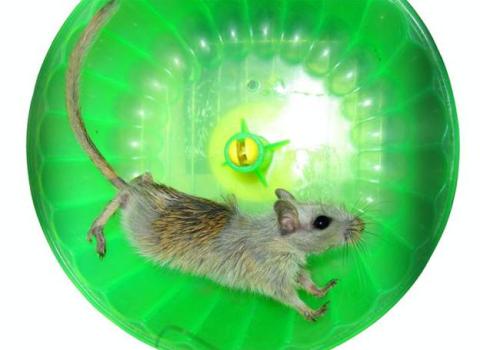
Well, scientists trained mice to run on exercise wheels at 70% of their aerobic capacity every day for five weeks. The mice started running at the age of 8 months, which for them is the beginning of mature age, or at the age of 12 months, which is the middle of the mice’s old age.
Those who exercised every day increased their production of new brain cells by two and a half times, compared to those who didn’t exercise. And these new neurons—which are nerve cells—were integrated into the existing brain network.
The researchers also concluded that treadmill exercise not only increased the quantity, but also strengthened the quality of the new neurons. The rats that started exercising at the beginning of their mature years obtained better results compared to those that started at the end of it.
In another study, carried out by Feraz Rahman and colleagues at the University of North Carolina in the United States on 12 healthy people aged between 60 and 80, it was observed that regular exercise is associated with an increase in the total number of blood vessels in the brain and an increase in blood flow in the three main cerebral arteries.
This brings benefits to areas that control functions such as consciousness, memory, emotional response and language. Evaluating magnetic resonance images, the experts found that those who, for 10 years or more, had exercised about 3 hours a week in aerobic activities had a greater number of small vessels—150 compared to 100 for sedentary people—and a 50% greater blood flow in the brain.
A study presented at the 10th National Conference on the Psychological Health of Children, in Gainesville, Florida, in April 2006, and published in the journal Pediatric Exercise Science, evaluated 208 children between the ages of 7 and 11 who were overweight and sedentary. It found that those who started exercising after class had lower scores on the anger scale, as well as better physical conditioning. The authors point out that physical exercise can improve mood and cognitive function, helping children to have more self-control. How interesting is that?
Call to Action
So, if even mice have made incredible gains by moving around, imagine what you can achieve with the simple habit of exercising! You don’t have to start by running a marathon—a regular walk, stretching, or even climbing the stairs can make a difference. The important thing is to take the first step, literally. Your brain, your body, and your mood will thank you. How about starting today?

The above was originally published at Abundant Health.
- Ellen G. White, Mind, Character, and Personality, vol. 2 (Southern Publishing Association, 1977), 397.
- Hansen, Cheryl & Stevens, Larry & Coast, J.. (2001). Exercise Duration and Mood State: How Much Is Enough to Feel Better?. Health Psychology 20(4):267-75 https://dx.doi.org/10.1037/0278-6133.20.4.267.
- Carek PJ, Laibstain SE, Carek SM. Exercise for the treatment of depression and anxiety. Int J Psychiatry Med. 2011;41(1):15-28. doi: 10.2190/PM.41.1.c.
- Exercise: The Brain´s Fountain of Youth. Journal of Applied Physiology 18 Nov 2008.