

It was a hot and humid day on November 18, and excitement was in the air. We were about to have a front-row seat for the MAVEN spacecraft's launch from Cape Canaveral, Florida. The countdown to lift-off would soon begin…
In 2013, I participated in the Albert Einstein Fellowship at the National Science Foundation in Washington, DC. This program places accomplished STEM teachers with federal agencies and congressional offices for 11 months. It allows teachers to influence national STEM policies and to gain valuable professional development experiences to share with their classrooms. I was placed with the Engineering Directorate at the National Science Foundation, where I was exposed to several exciting and innovative engineering research projects happening in universities across the United States. The fellowship was a meaningful and wonderful experience for me.
One of the highlights of my stint was being invited to watch the launch of NASA’s MAVEN spacecraft at Cape Canaveral, Florida. After checking into a hotel at an Air Force base, we visited the Kennedy Space Center, explored exhibits, and learned about the mission. MAVEN is a spacecraft designed to travel to Mars and to collect information about Mars’ atmosphere.
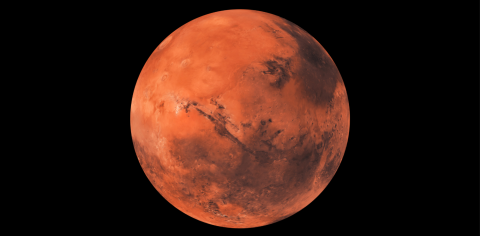
It was a hot and humid day in November, and excitement was in the air. We arrived at the launch site early enough to watch the countdown on a large digital clock mounted on a pole in front of us. The spacecraft was mounted on the Atlas V rocket that would propel it towards Mars’ orbit. We had front row seats facing the launch site, which was across the lake. As the launch grew closer, we could hear the engineers checking the systems and then the final countdown. Soon, the rocket's engines thrust it upward. I could hear the roar and felt as if the earth slightly shook on liftoff. The rocket accelerated, leaving a trail of fire and smoke in the atmosphere. MAVEN was on its 10-month journey to the Red Planet! It entered Mars’ orbit on September 22, 2014. While orbiting Mars, it sent valuable information to scientists and engineers on Earth. The cost of this launch was several hundred million dollars, plus the millions of dollars required to maintain its orbit. It has been in orbit for more than eleven years, but on December 4, 2025, NASA lost contact with it. Even if it cannot be recovered, it has already accomplished its mission, since it was expected to stay in orbit for only two years.1
Although I do not fully understand all the data MAVEN collects, the mission highlights how vast and complex our universe is. Mars is just one planet in our solar system, which is only a small part of the vast Milky Way galaxy, itself only one of the billions, or possibly trillions, of other galaxies in the universe. I am just an infinitesimally tiny speck in the Universe, but I know that God knows me intimately. He is in the details of my life, and in everyone’s life. He died for me that I may have salvation – that is just an awe-inspiring, awesome thought! Someday, I hope to travel not only to Mars but also to the farthest galaxies with God!
Call to Action: Remember the Ruler of the Universe
“No eye has seen, no ear has heard, and no mind has imagined what God has prepared for those who love Him.”
1 Corinthians 2:9 (NLT)
Dear Jesus, thank you that you are the Ruler of the Universe, and yet you know me intimately. You know all the details of my life, and yet you love me for who I am. Thank you for your promise of the place that you have prepared for those who love you.

- Stahl, Asa (2026, January 26). NASA has lost a spacecraft around Mars. Is MAVEN gone for good? The Planetary Society. https://www.planetary.org/articles/nasa-has-lost-a-spacecraft-around-mars#:~:text=A%20pioneering%20spacecraft%20has%20gone,when%20it%20should%20have%20reappeared.